Arpeggio (Unity, 2016)

Every stone model (walls, floors, columns, etc) in Arpeggio started out as a fairly quick & dirty high poly sculpt. Those sculpted details can be transfered to the low poly versions on the right in a process known as texture baking.
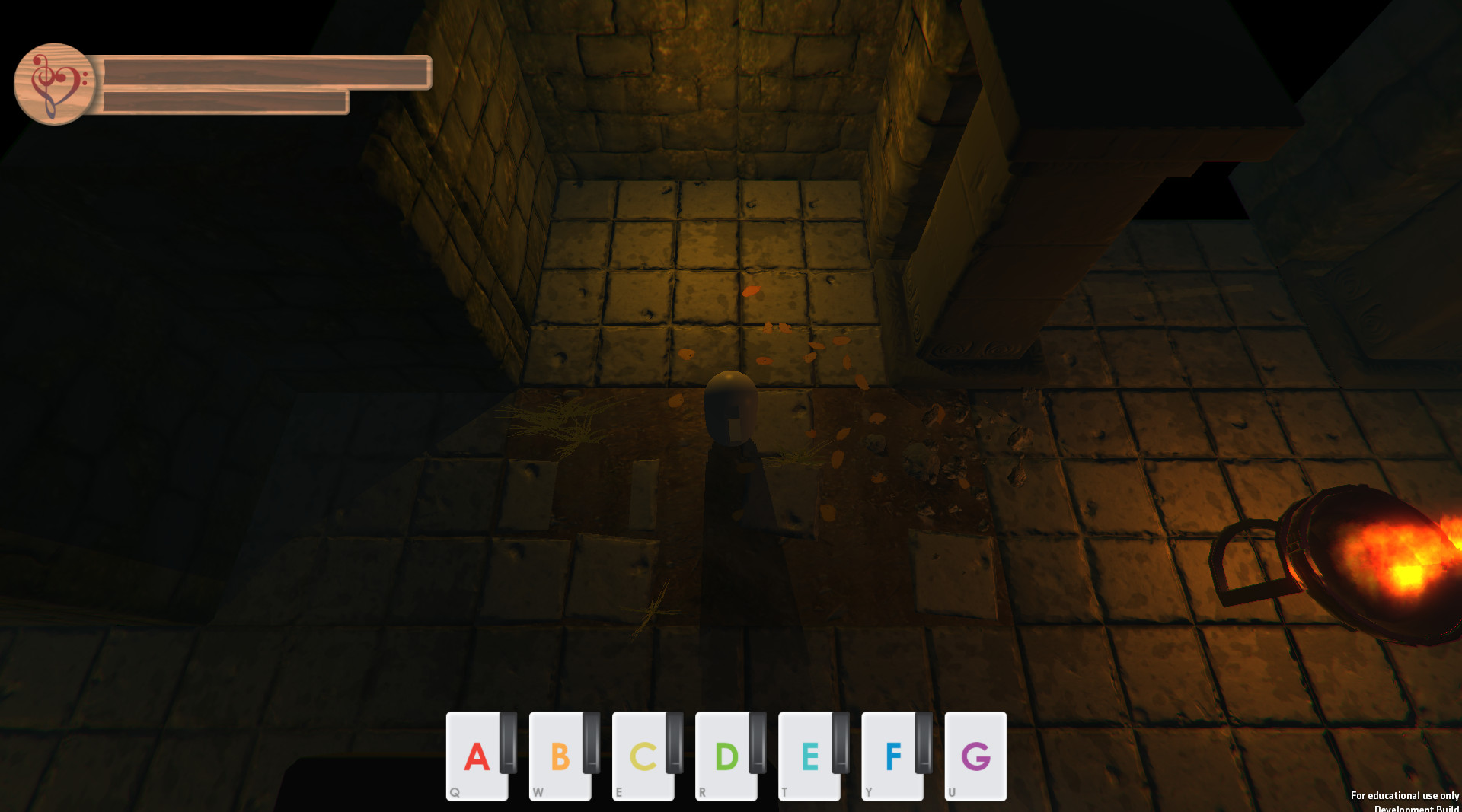
Early Pre-Alpha screenshot
Interactive Sketchfab model containing many of the assets Arpeggio used.

The objective of the game was to navigate old ruins with a magical harp. Notes at the bottom of the screen can be played via the keyboard, shooting the note out as a ball of energy that damages enemies.

I modeled, textured and lit the entire game environment by hand. This was pre-substance painter times for me. I used xNormals for baking details and Photoshop for albedos.
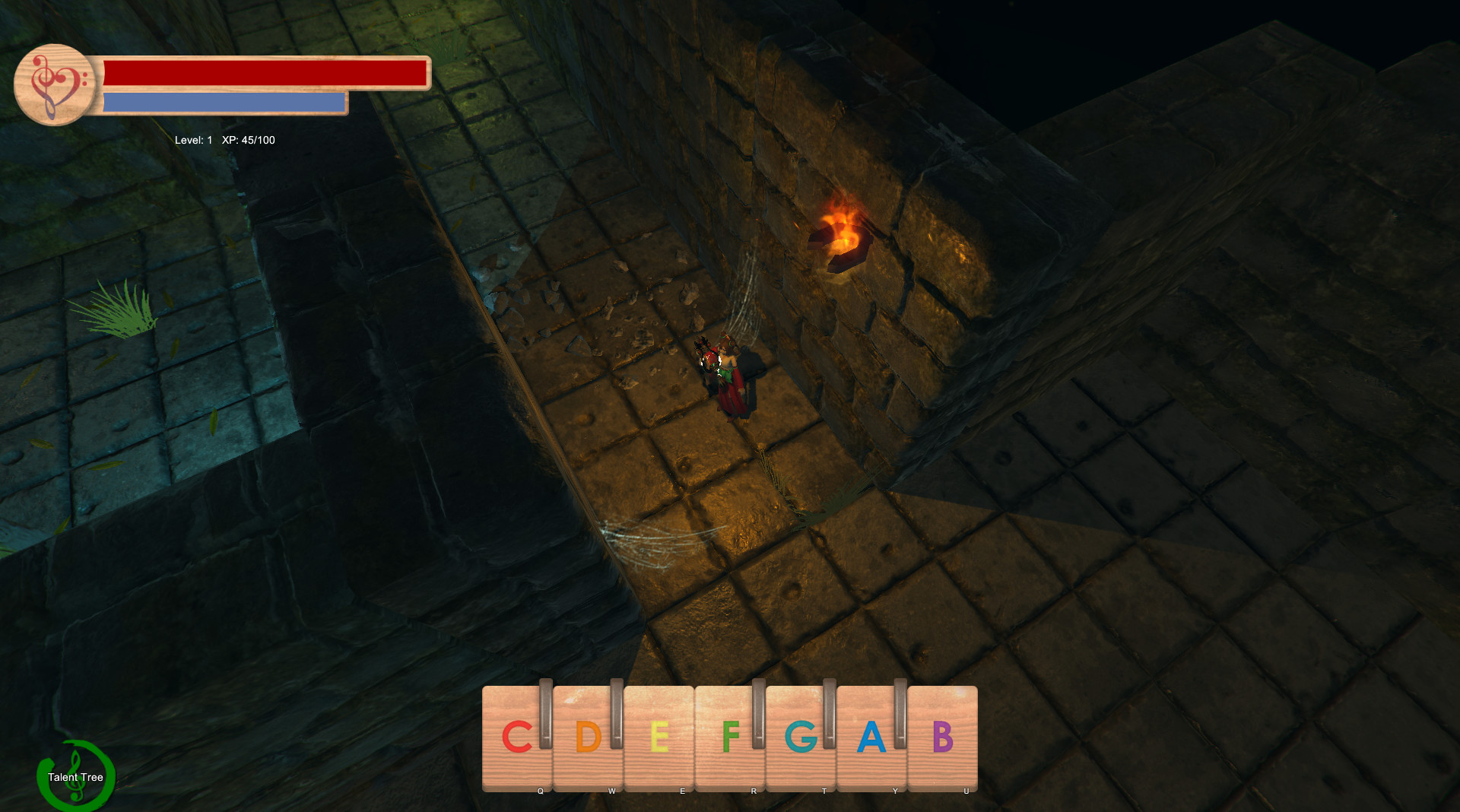


Final boss fight area leads outdoors. The boss fight unfortunately never fully finished, as we ran out of time to complete it.
Arpeggio was a student-developed game created by a nine-person team at the University of Texas at Dallas as part of Gamelab, a course structured to operate like a real development studio. Projects begin as pitches and, within a single semester, are taken all the way to a fully playable game.
I served as the sole environment artist on the project, owning the visual identity of the game end-to-end. This included environment modeling, all texture work, lighting, particle effects, and even contributing ambient audio to help define the game’s mood. Working solo on the environment meant balancing speed, consistency, and visual cohesion while supporting a fast-moving production schedule—an experience that closely mirrored real-world studio constraints.
While this particular game was made during a period at which I didn't fully understand 3D modeling/environment creation, I am still very proud of it.